

Why tooling decisions determine the outcome of a plastic injection molding project
For any OEM or ODM plastic product, the steel mold is the single largest fixed investment and the hardest cost to reverse. A 650-ton injection molding machine can produce millions of parts, but it can only produce them to the tolerances the mold was cut to. Once the cavity geometry is finalized, changes mean welding, remachining or in some cases cutting a new insert entirely.
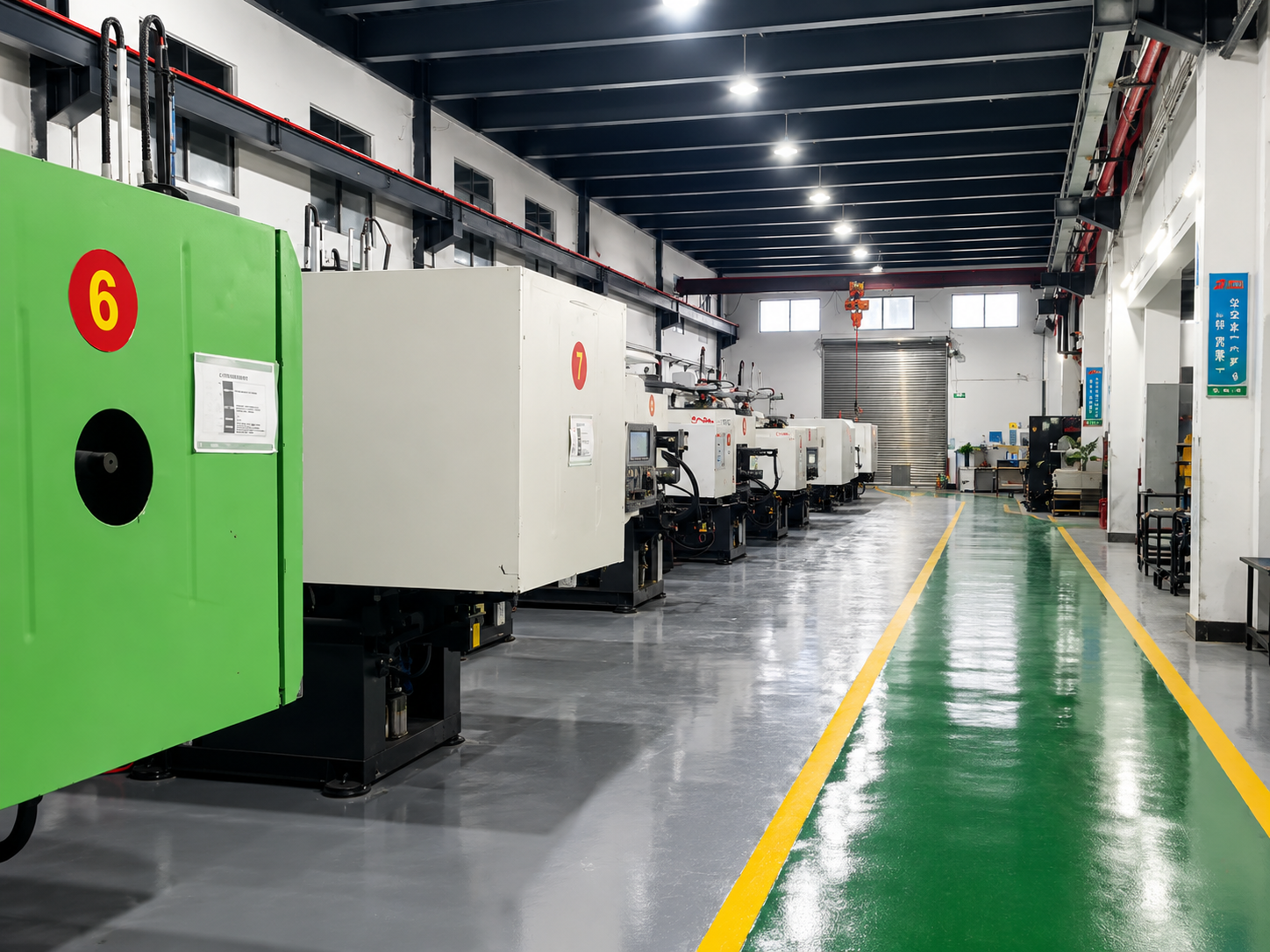
Huizhou Xiantianbao Technology Industrial Co., Ltd. operates 19 vertical and horizontal injection molding machines from 98 tons to 650 tons, and has handled injection-molded production for internationally recognized brands including IKEA, Contigo and Disney. That experience has been built around a single operating principle: the tooling review is where project risk is either removed or locked in.
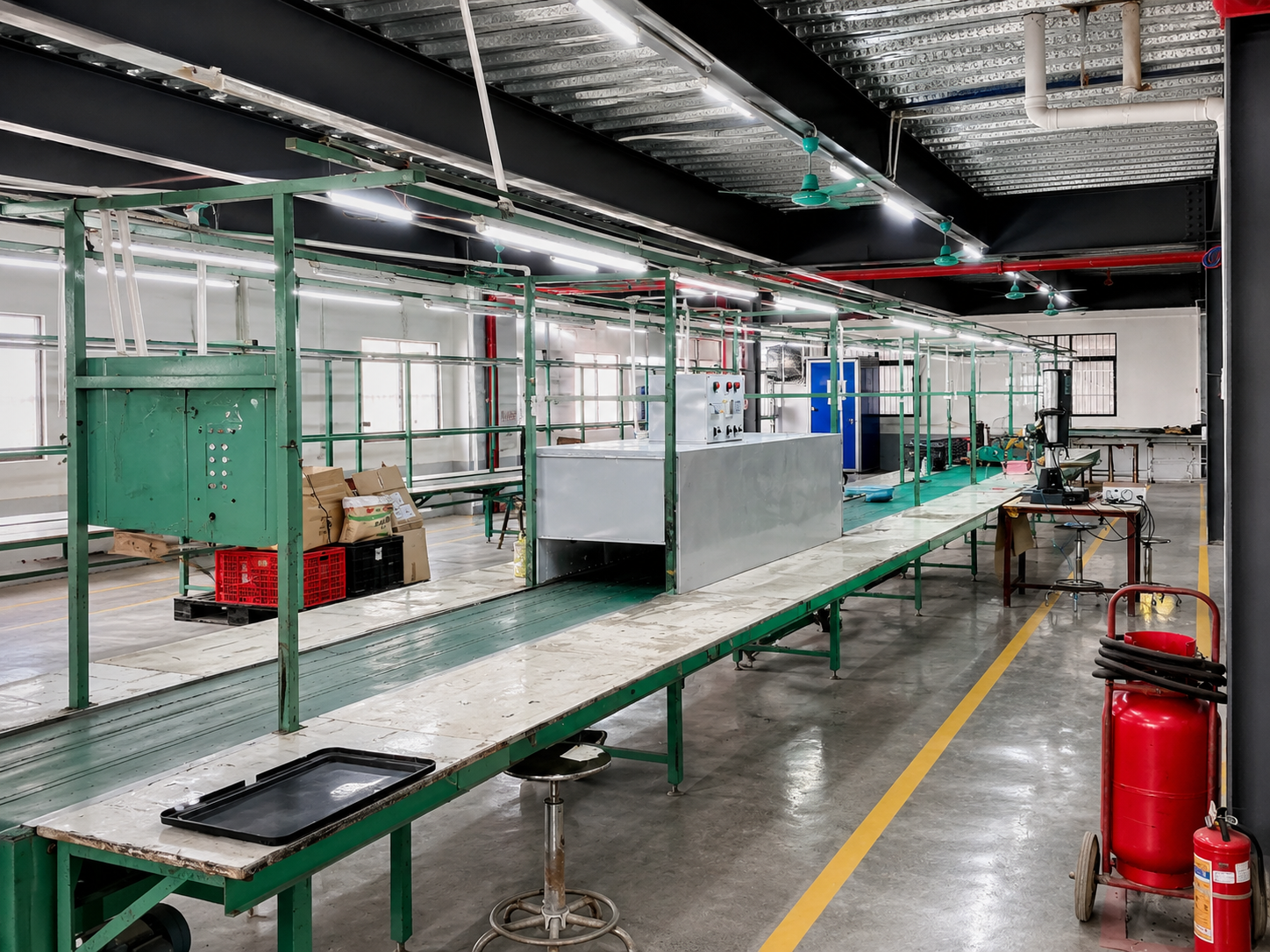
The five tooling parameters that belong in a pre-quote review
Before a quotation is meaningful, five parameters should be agreed in writing. Each one changes the mold cost, the cycle time, or both.
| Parameter | What it controls | Typical cost impact |
|---|---|---|
| Parting line & draft angle | Ejection reliability, visible seam position | Low — but changes after T1 are expensive |
| Cavity count | Cycle time vs. tool cost trade-off | High — roughly linear with cavity count |
| Runner system (cold vs. hot) | Material waste, cycle time, regrind quality | Medium to high |
| Gate type & location | Fill balance, weld lines, cosmetic finish | Low to medium |
| Cooling layout | Cycle time and dimensional stability | Medium — highest payoff per yuan |
Cooling deserves particular attention. A well-laid-out cooling circuit is usually the cheapest way to reduce cycle time, and cycle time is the cost driver that repeats on every single part rather than once per project. A mold that costs slightly more to build but runs three seconds faster can pay back the difference within a modest production run.
Cavity count: why the obvious answer is usually wrong
The instinct is to specify as many cavities as the machine allows, on the assumption that more parts per shot always means lower unit cost. In practice the relationship is driven by the production volume actually committed.
- Low volume, high variety. A single-cavity or two-cavity family mold usually wins. Tooling cost stays low and the project can respond to design changes without scrapping a large tool.
- Stable high volume. Multi-cavity tooling amortizes well, but only if the part design is frozen. If a cosmetic or fit change is still likely, the multi-cavity tool converts a small change into a large loss.
- Cosmetically critical parts. Increasing cavity count makes it harder to hold identical appearance across all cavities. When parts must look identical side by side, cavity balance and cooling uniformity matter more than output per shot.
From T1 samples to mass production: the validation sequence
The first trial (T1) is not a production milestone — it is a measurement exercise. At Xiantianbao, the sequence from T1 to mass production follows a structured path:
- T1 dimensional report. Critical dimensions are measured against the drawing, with dimensional reports issued for customer review rather than a verbal confirmation.
- Material and appearance check. Colour, texture and gloss are compared against the approved standard under defined lighting.
- Fit and function assembly. Where the part forms part of a larger assembly, it is tested in that assembly before sign-off.
- Process window lock. Once samples are approved, the injection parameters — melt temperature, holding pressure, cooling time — are frozen and recorded so that production repeats the approved condition rather than a nearby one.
- Production run with in-process inspection. Parts are checked during the run, not only at the end, so drift is caught before a full batch is affected.
What buyers should ask a supplier to provide
Documented tooling decisions and inspection records are the difference between a supplier relationship that scales and one that repeatedly re-litigates the same questions. Buyers evaluating an injection molding partner should expect, as standard:
- Mold design review with DFM feedback before steel is cut, including any recommendation to change wall thickness, draft or gate position.
- T1 dimensional reports against the drawing, with deviation clearly listed rather than summarized.
- A frozen process window recorded after sample approval.
- In-process inspection during production runs, plus final inspection before packing.
- A written statement of which party owns the mold and under what conditions it can be transferred.
With a factory area of 4,135 m², a High-Tech Enterprise designation since 2019 and complete in-house capability spanning product development, mold development, injection molding, assembly and packaging, Xiantianbao is structured to keep these decisions inside one controlled process rather than spread across subcontractors. Buyers working on a new plastic product program are welcome to contact us to discuss tooling feasibility and receive a quote-ready technical response.